If Dr. Sajid has recommended a cone beam CT scan — or you've spotted "CBCT" on a treatment plan — you might be wondering what it is, whether it's safe, and why a regular X-ray isn't enough. Here's the plain-English guide we wish every patient had.
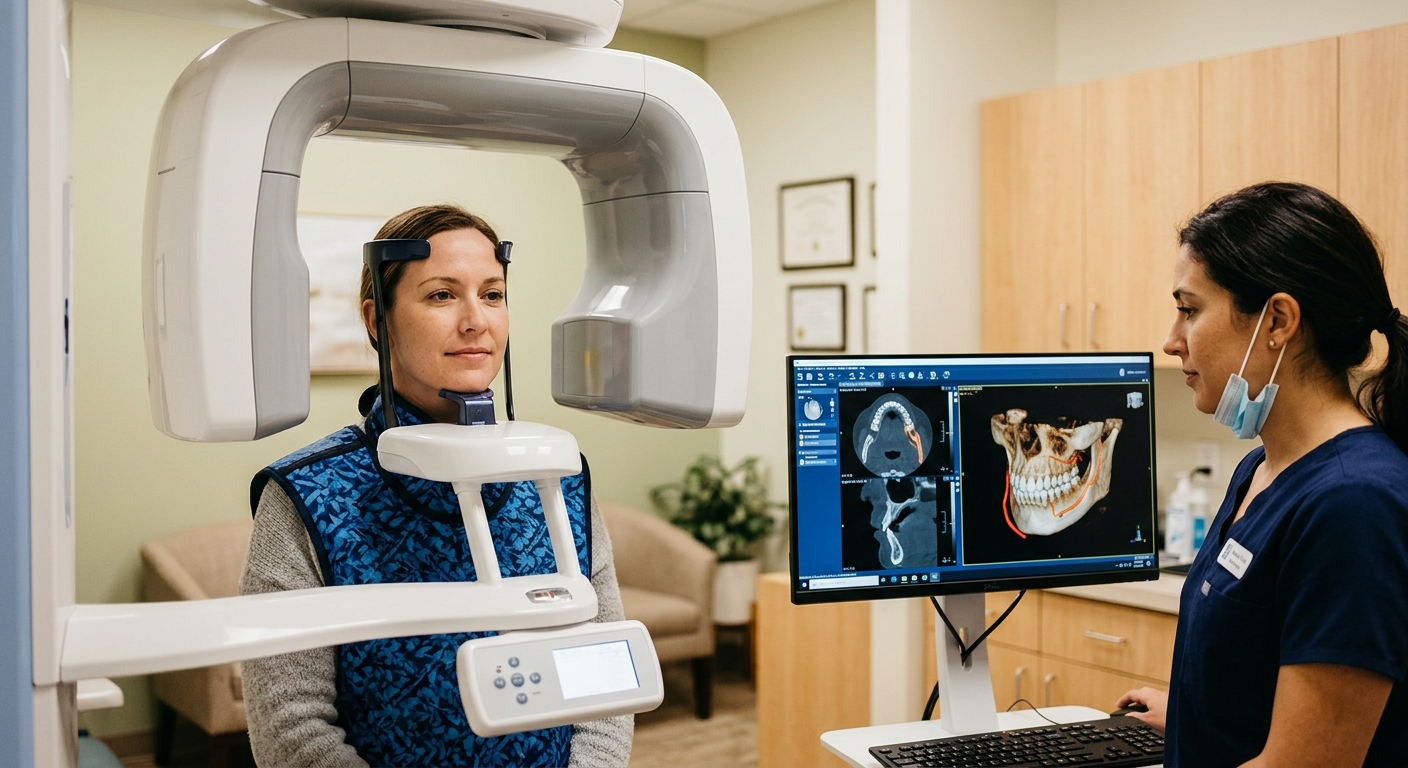
A cone beam CT (computed tomography) scanner is a 3D imaging machine built specifically for dentistry. Instead of the flat, two-dimensional picture a traditional X-ray produces, a CBCT unit rotates once around your head and captures hundreds of views, which a computer assembles into a detailed three-dimensional model of your teeth, roots, jawbone, nerves, sinuses, and airway. The "cone beam" name comes from the cone-shaped X-ray beam it uses — a design that keeps the scan fast and the radiation dose far below that of a medical CT you'd get at a hospital.
Standard digital X-rays remain perfect for routine checkups — spotting cavities between teeth or monitoring bone levels. But they flatten a three-dimensional problem into two dimensions. A CBCT scan shows exactly where a tooth root curves, how thick the jawbone is in millimeters, and where the nerve canal runs — the difference between estimating and knowing. Think of it as the difference between a photograph of a house and a full architectural walkthrough.
At our Sacramento office, cone beam imaging most often guides: dental implant planning — measuring bone precisely so implants are placed safely and predictably (see our complete guide to dental implants); wisdom teeth evaluations — mapping roots near the nerve before removal decisions; root canal diagnosis — finding hidden canals and cracks that flat films miss; orthodontic and airway assessment — understanding jaw position before treatments like Invisalign; and unexplained pain — locating infections or fractures that would otherwise stay invisible.
Refreshingly uneventful. You stand (or sit) while positioning supports steady your head, the arm of the machine makes one quiet rotation — about 10 to 20 seconds — and you're done. Nothing touches you, nothing goes in your mouth, and there's no claustrophobic tunnel. The 3D images appear on our screens within a minute or two, and Dr. Sajid can walk you through your own anatomy on the spot — most patients find seeing their scan genuinely fascinating.
Dental CBCT uses a small fraction of the radiation of a medical CT scan — a typical small-field dental scan is roughly comparable to a few days of the natural background radiation everyone receives simply living on Earth. We follow the ALARA principle ("as low as reasonably achievable"): scans are only recommended when the 3D information will genuinely change or improve your care, the field of view is kept as small as the diagnostic question allows, and protective aprons are used when appropriate. If you're pregnant or have concerns, tell us — we'll always discuss timing and alternatives.
Costs vary by the size of the scan, and many dental insurance plans cover CBCT when it's diagnostically necessary — for example, as part of implant planning or evaluating an impacted tooth. At Milestone Family Dental, imaging needed for your treatment plan is quoted up front in writing, and because our scanner is in-house, there's no separate imaging-center visit, referral delay, or surprise facility fee.
We invested in cone beam CT technology for one reason: better information produces better dentistry. It's why our implant patients get placement guided by their own 3D anatomy and why tricky diagnoses get answered in one visit instead of three. If you've been told you need a CBCT scan — or you'd simply like a second opinion backed by complete imaging — we're happy to help. Call (916) 920-3572 or book online; new patients from Sacramento, Arden-Arcade, and Carmichael are always welcome.